

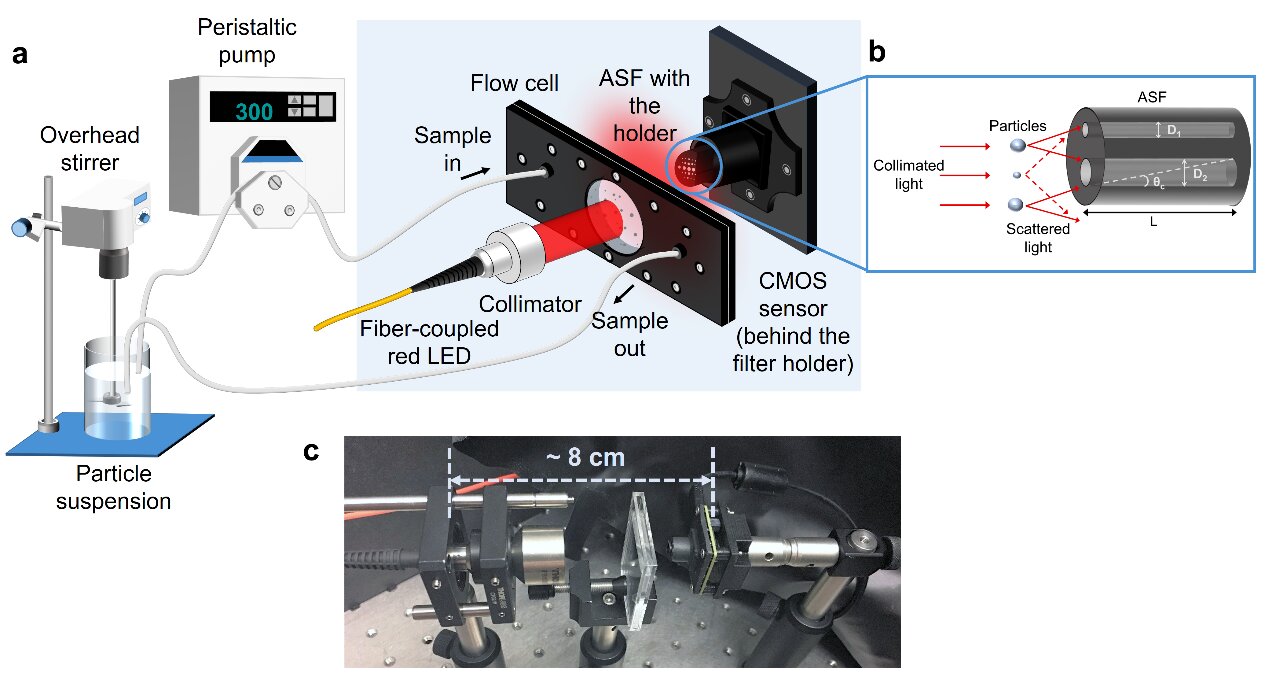
A particle size analyzer quantifies the size distribution of solid particles or droplets by measuring their interaction with a controlled sensing field. Instruments infer size from scattering, diffraction, sedimentation, electrical impedance or Brownian motion Particle Size Testing, applying models that assume shape, refractive index or density. Results report means, percentiles and distribution width to guide formulation and process control. Accurate output requires representative sampling and standardized dispersion. Continue for a systematic explanation of methods, metrics and selection criteria.
Why Particle Size Matters Across Industries
Across industries, particle size governs fundamental material behaviors and process outcomes, linking microscopic dimensions to macroscopic performance. The discussion isolates quantifiable effects: surface area-to-volume ratios alter reaction rates, settling velocity affects suspension stability, and size distributions determine packing density. Operators adjust milling, classification, and formulation to target measurable endpoints that optimize product performance and minimize variability. Quality teams enforce acceptance criteria tied to particle metrics to guarantee regulatory compliance and reproducibility https://laballiance.com.my/. Decision-making relies on systematic measurement, statistical control, and traceable documentation. This precision-driven perspective enables predictable scaling, reduced waste, and controlled risk across production and application environments.
Core Measurement Principles and How They Differ
In comparing measurement approaches, the fundamental principles diverge around what is sensed (optical, acoustic, electrical, or physical obstruction), how that signal maps to a size metric (equivalent spherical diameter, Feret width, or surface-area-weighted mean), and the assumptions required for that mapping (particle shape, refractive index, or dispersion state). Methods relying on scattering mechanisms interpret angular and intensity distributions and require controlled optical properties. Sedimentation principles use terminal velocity to infer size, demanding known fluid viscosity and particle density. Electrical and obstruction techniques quantify volume or cross-section directly, but each demands calibration, deconvolution algorithms, and explicit assumptions about aggregation state.
Common Instrument Types and How Each Works
The text compares two prevalent instrument classes: laser diffraction analyzers, which infer size distributions from angular scattering patterns generated by a laser beam, and dynamic light scattering (DLS) systems, which extract hydrodynamic diameters from time-dependent fluctuations in scattered intensity. It systematically contrasts their measurement principles, typical size ranges, and assumptions about particle shape and concentration. Emphasis is placed on how instrument-specific signal processing and model selection influence accuracy and resolution for different sample types.
Laser Diffraction Analyzers
Describing the principal configurations and operating principles of laser diffraction analyzers, this section examines how beam geometry, detection optics, and data inversion algorithms combine to measure particle size distributions: bench-top and inline instruments typically employ a collimated laser or diverging beam with forward and sometimes backscatter detectors arrayed to capture angular intensity patterns; wet and dry dispersion systems differ by whether particles are suspended or aerosolized prior to illumination, affecting concentration control and multiple scattering; and analysis relies on Mie theory or Fraunhofer approximations (with associated refractive index and wavelength inputs) to invert measured scattering into size distributions, with instrument-specific factors — detector range, obscuration limits, and alignment stability — defining measurable size and concentration envelopes.
Laser diffraction systems use controlled laser scattering and beam shaping to optimize signal-to-noise, reduce diffraction artifacts, and extend dynamic range. Calibration, refractive index selection, and validated inversion settings are essential for repeatable, quantitative results; operators must manage dispersion parameters, concentration, and optical alignment to maintain traceable performance.
Dynamic Light Scattering
Characterizing Brownian motion through time-resolved light scattering, dynamic light scattering (DLS) instruments infer particle size distributions by analyzing temporal fluctuations of scattered intensity caused by microscopic particle diffusion. The instrument directs a coherent laser into a dilute suspension; detectors measure scattered light at fixed angles while electronics perform photon correlation to generate an intensity autocorrelation function. Analytical software fits correlation decay rates to obtain translational diffusion coefficients, then applies the Stokes–Einstein relation to calculate hydrodynamic diameters. Rigorous sample preparation, temperature control, and concentration optimization minimize multiple scattering and non-Brownian effects, enabling reproducible, quantitative size control and diagnostics.
Key Metrics: What the Numbers Mean
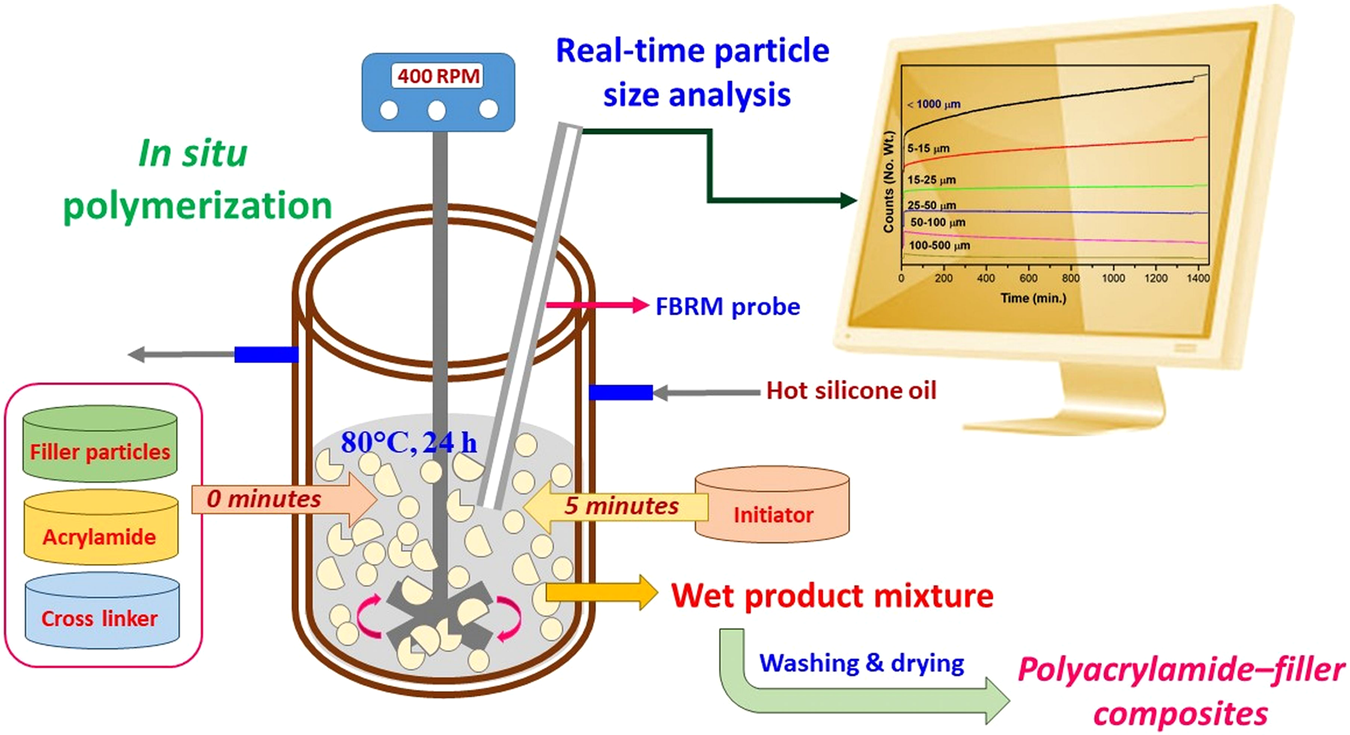
How do the numerical outputs of a particle size analyzer correspond to physical sample properties? Metrics translate measured signals into interpretable descriptors: mean diameter indicates central tendency; distribution width quantifies spread and polydispersity; mode, median and percentiles reveal subpopulations. Interpretation is procedural and quantitative, enabling control decisions.
| Metric | Definition | Control implication |
|---|---|---|
| Mean diameter | Average particle size | Process setpoints |
| Distribution width | Size variability measure | Stability assessment |
| D10/D50/D90 | Percentile sizes | Cutoff specifications |
| Polydispersity index | Cohesiveness indicator | Formulation risk |
Operators use these numbers to monitor, troubleshoot, and specify.
Sample Preparation and Measurement Best Practices
Accurate interpretation of numerical outputs depends on rigorous sample preparation and measurement procedures that preserve the sample’s representative size distribution and minimize measurement artifacts. The practitioner documents provenance, selects aliquot size, and executes sample homogenization using standardized mechanical or ultrasonic methods to guarantee reproducible dispersion. Instrument settings are validated with calibration materials; measurement timing and concentration avoid multiple scattering or coincidence. Contamination control is enforced via clean tools, filtered fluids, and procedural blanks. Data collection follows predefined protocols, with replicate measurements and statistical thresholds for acceptance. Traceable records and chain-of-custody maintain accountability and enable controlled, repeatable analyses.
Strengths, Limitations, and Typical Sources of Error
While particle size analyzers provide quantitative, high-throughput assessments across broad size ranges, their outputs are constrained by instrument principles, sample state, and data-processing assumptions; understanding these constraints is essential for interpreting results correctly. Strengths include repeatable statistics, rapid throughput, and sensitivity to modal shifts. Limitations arise from technique-specific biases (optical scattering versus sieving), unresolved subpopulations, and assumptions in inversion algorithms. Typical sources of error include inadequate sample dispersion, particle aggregation, incorrect refractive index or density inputs, detector saturation, and operator-induced variability. Careful protocol control, calibration, and reporting of measurement uncertainty are necessary for defensible, comparable results.
How to Choose the Right Analyzer for Your Application
Which performance criteria matter most depends on the measurement objective, sample characteristics, and downstream decisions informed by the data. The selection process evaluates resolution, size range, throughput, repeatability, calibration needs, application cost, and environmental constraints. Decision-makers weigh trade-offs: precision versus speed, versatility versus specialization, and maintenance burden versus uptime. A systematic checklist aligns instrument capabilities with protocols, sample prep, and regulatory obligations. Risk assessment quantifies uncertainty and contingency plans. Confidence grows from documented validation, supplier support, and total cost of ownership.
- Choose certainty: prioritize validated accuracy.
- Choose control: prioritize operational robustness.
- Choose efficiency: prioritize lifecycle cost.
Conclusion
Accurate particle size analysis underpins product performance, process control, and regulatory compliance across industries. By selecting measurement principles and instruments that match material properties and intended metrics, practitioners can obtain meaningful, reproducible data. Careful sample preparation, awareness of method-specific biases, and routine calibration mitigate common errors. Understanding each technique’s strengths and limitations enables informed trade-offs between resolution, range, and throughput. Ultimately, methodical selection and disciplined measurement practice guarantee particle size data reliably guide development and quality decisions.